Evaluating 3D Colorful Floral Sublimation Patterns for Digital Crafting and Print Projects
The landscape of digital design resources has expanded significantly, offering creators a vast array of assets to enhance their physical and digital products. Among the most versatile categories are 3d Colorful Floral Sublimation Patterns. These designs bridge the gap between traditional botanical aesthetics and modern digital rendering techniques, providing depth, vibrancy, and texture that flat vector graphics often lack. For crafters, small business owners, and designers, understanding the specific utility, technical specifications, and application scenarios of these patterns is essential before integrating them into a workflow.
This evaluation explores what makes this specific style distinct, how it compares to other design formats, and which projects benefit most from its inclusion. By examining the technical details—such as resolution, file structure, and seamless tiling capabilities—we can determine when these assets are the optimal choice and when alternative resources might serve better.
Understanding the Aesthetic: Depth and Realism in Digital Florals
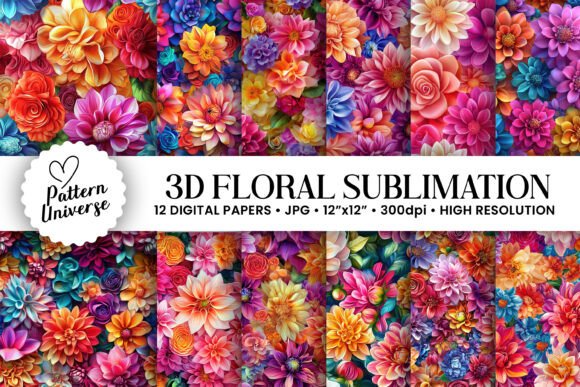
The term "3D" in digital art refers to the simulation of three-dimensional space on a two-dimensional surface. In the context of floral sublimation patterns, this means the flowers are rendered with shading, highlights, shadows, and perspective that mimic real-world objects. This creates an illusion of volume, making the blooms appear to pop off the page or wrap around cylindrical surfaces like tumblers.
Unlike hand-drawn watercolor illustrations or rigid geometric vectors, 3d Colorful Floral Sublimation Patterns offer a photorealistic yet artistic quality. The "colorful" aspect emphasizes high saturation and contrast, ensuring that the designs remain vibrant even after being printed and transferred. This visual impact is particularly critical for sublimation printing, where the ink penetrates the substrate; dull colors can result in muted final products, whereas high-contrast 3D renders maintain their integrity.
A key feature of high-quality pattern packs is the use of AI generation or advanced digital painting tools to achieve consistency. When evaluating these assets, look for natural variations in petal placement and lighting. Poorly executed 3D patterns may exhibit repetitive artifacts or unnatural lighting angles, which become obvious when tiled seamlessly. The best examples provide organic flow, preventing the "grid effect" that can ruin large-format prints.
Technical Specifications and File Integrity
For professional results, the technical specifications of the digital paper are just as important as the visual design. A standard package of 3d Colorful Floral Sublimation Patterns typically includes multiple variations within a single zip file. Understanding the parameters helps buyers avoid compatibility issues and ensure print readiness.
- Resolution: High-resolution files are non-negotiable for sublimation. Files should be at least 300dpi (dots per inch). Lower resolutions result in pixelation, especially when scaling up for wall art or large wrapping paper.
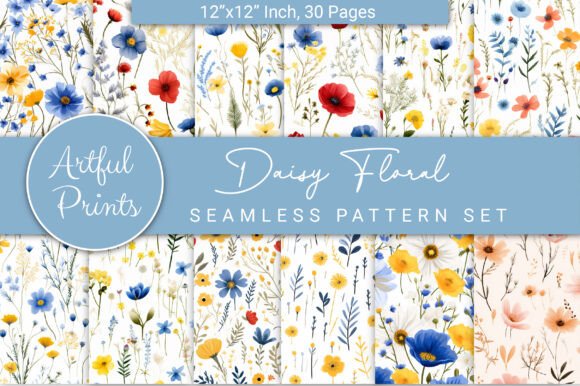
- Dimensions: The industry standard for scrapbooking and crafting is 12″ x 12″ (3600 x 3600 pixels). This size allows for easy cropping and layout adjustments in design software without losing detail. Some packages may include larger sizes for direct printing, but 12x12 offers maximum flexibility for cutting and layering.
- Format: While not explicitly detailed in every listing, these files are typically provided in JPEG or PNG formats. JPEGs are efficient for color-rich images, while PNGs support transparency if needed for layering in collage-based projects.
When comparing options, check if the files are truly seamless. A seamless pattern repeats flawlessly in all directions, which is crucial for wrapping irregular shapes or creating continuous backgrounds. If a pattern has hard edges or visible seams, it limits its usability to simple square layouts rather than complex wraps.
Comparative Analysis: Sublimation Patterns vs. Other Digital Assets
Crafters often choose between several types of digital assets: vector graphics, raster illustrations, photographic elements, and pre-made digital papers. Here is how 3d Colorful Floral Sublimation Patterns stack up against these alternatives.
vs. Vector Graphics
Vector graphics are infinitely scalable and ideal for clean, minimalist designs. However, they often lack the textural richness required for realistic floral depictions. If you are designing a corporate invitation with simple line art, vectors are superior. But for a gift wrap that needs to convey luxury and organic beauty, the depth of a 3D render provides a more premium feel. Vectors also do not translate well to sublimation unless heavily textured, whereas 3D floral patterns are optimized for this medium.
vs. Hand-Drawn Watercolor Illustrations
Watercolor styles evoke a soft, romantic, and vintage aesthetic. They are excellent for wedding invitations and baby shower materials. In contrast, 3D colorful florals tend to be bolder and more contemporary. The trade-off here is mood: watercolors feel intimate and fragile, while 3D renders feel dynamic and energetic. If your target audience prefers classic elegance, watercolors may be the better fit. If they prefer modern vibrancy, the 3D option wins.
vs. Stock Photography
Using stock photos offers realism but often comes with licensing restrictions and inconsistent styling. A pack of 12 coordinated digital papers ensures visual harmony across different pages of a junk journal or a set of matching mugs. With stock photos, finding twelve images that share the same color palette and lighting conditions is difficult and time-consuming. Pre-made pattern packs save research time and guarantee cohesion.
Best-Fit Applications and Use Cases
The versatility of 3d Colorful Floral Sublimation Patterns makes them suitable for a wide range of applications. However, some uses highlight their strengths more than others.
Sublimation Products
This is the primary intended use. The high resolution and vibrant colors are specifically engineered for heat transfer onto polyester fabrics, ceramic mugs, and coated metal tumblers. The seamless nature allows for full-wrap designs on curved surfaces, such as travel mugs or phone cases, without awkward interruptions in the floral motif.
Digital Scrapbooking and Junk Journals
In the digital crafting community, these patterns serve as excellent background layers. Their rich detail provides enough visual interest to stand alone but can also be toned down or overlaid with text boxes for journaling. The 12″ x 12″ format fits perfectly into standard digital scrapbooking software interfaces, allowing for quick drag-and-drop integration.
Print-on-Demand Services
For those selling on platforms like Etsy or Redbubble, these patterns can be applied to home decor items like throw pillows, canvas wall art, and greeting cards. The 3D effect adds perceived value to the product, making it appear more custom and high-end compared to flat designs.
Greeting Cards and Invitations
While beautiful, bold 3D florals may overwhelm delicate text if not used carefully. They work best for celebratory occasions—birthdays, summer parties, or spring events—where energy and brightness are desired. For formal weddings or somber occasions, subtler patterns might be more appropriate.
Evaluation of Value and Limitations
When deciding whether to purchase a pack of 12 digital papers, consider the cost-per-use. A single high-quality pattern can be used across dozens of products. However, there are limitations to keep in mind.
Licensing: Always review the end-user license agreement (EULA). Most digital paper packs allow for personal use and limited commercial use (e.g., selling up to a certain number of physical items). They rarely permit resale of the digital files themselves. If you plan to distribute the patterns, you will need an extended license.
Color Accuracy: Digital screens display colors using RGB light, while printers use CMYK ink. Even with high-quality files, color shifts can occur during the sublimation process. It is advisable to test print one item before committing to a large batch. The "colorful" nature of these patterns usually holds up well, but neon tones may require calibration.
File Management: Receiving 12 files in a zip archive requires basic organizational skills. Ensure you have adequate storage space and a reliable extraction tool. Properly naming and sorting these files immediately upon download prevents confusion later in the design process.
Decision Factors: Is This Right for You?
To make an informed decision, ask yourself the following questions:
- Do I need seamless tiling? If yes, verify that the patterns are confirmed seamless. Broken tiles are frustrating and limit creative freedom.
- Is my equipment capable of handling 300dpi files? Older computers or basic printers may struggle with 3600x3600 pixel files. Ensure your hardware can handle the processing load.
- Does my brand align with bold, 3D aesthetics? If your style is minimal or monochrome, these colorful florals might clash with your existing portfolio.
- Am I looking for variety? A pack of 12 offers significant variety compared to single-pattern purchases. This is ideal for creators who need fresh content regularly for social media or product lines.
In conclusion, 3d Colorful Floral Sublimation Patterns represent a robust solution for creators seeking depth and vibrancy in their designs. They excel in sublimation projects, digital scrapbooking, and bold print media. While they may not suit every aesthetic preference—particularly those favoring minimalism or traditional hand-drawn styles—they offer a compelling blend of technical quality and artistic appeal. By understanding their specifications and appropriate use cases, you can leverage these assets to enhance your craft projects effectively.