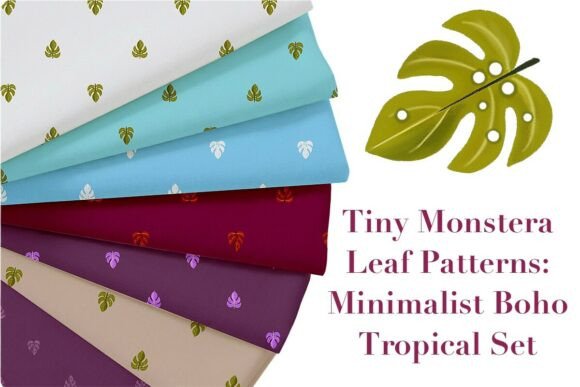
Tiny Monstera Leaf Patterns: Minimalist Tropical Design Assets
In the world of visual design, there is often a tension between making a bold statement and maintaining a sense of calm sophistication. Loud, chaotic jungle prints can overwhelm a viewer, while plain solid colors sometimes lack the personality needed to connect with an audience on an emotional level. Tiny Monstera Leaf Patterns strike a perfect balance in this spectrum. This collection offers a subtle tropical touch that elevates projects without shouting for attention. By replacing traditional large-scale botanical illustrations with tiny, stylized leaves arranged in a neat, polka-dot style layout, designers can achieve a modern, clean aesthetic that feels both fresh and professional.
These designs are not merely decorative; they are versatile design assets that serve as functional backgrounds, linings, and textures. Whether you are working on brand identity for a lifestyle startup or creating print-on-demand apparel, understanding how to utilize minimalist tropical motifs can significantly enhance the perceived value of your work. The Tiny Monstera Leaf Patterns set provides eight distinct colorways, allowing for extensive customization across various mediums while maintaining a cohesive visual language.
The Visual Language of Minimalist Botanicals
To understand why these patterns work so well, it is helpful to look at their visual characteristics. Unlike classic serif font designs or heavy script fonts that demand focus, these patterns rely on repetition and scale. The "ditsy floral" style, when applied to monstera leaves, creates a rhythm that is pleasing to the eye but not distracting. Each leaf is reduced to its essential shape—often just the iconic split-leaf silhouette—rendered in a size small enough to function as texture rather than subject.
This approach aligns with current trends in Scandi-Boho and modern minimalist design. It appeals to audiences who appreciate nature-inspired aesthetics but prefer restraint over excess. The collection includes options ranging from the crisp contrast of Green and White to softer Pastel tones, deeper Dark shades, and vibrant Bright hues like Teal and Deep Berry. Mauve adds a trendy, feminine touch, while Deep Berry offers richness suitable for evening wear or premium packaging. These variations ensure that the pattern can adapt to different brand personalities, from playful and youthful to serious and sophisticated.
The technical specifications are equally important for digital creators. With files sized at 5000 x 5000 pixels and a resolution of 300 DPI, these assets are ready for high-quality printing. For web design and social media graphics, the transparent PNG option allows for seamless integration into layered compositions, ensuring that the pattern does not clash with underlying elements. The JPEG seamless patterns provide immediate utility for digital papers, requiring no tiling adjustments in software like Photoshop or Canva.
Practical Applications Across Creative Industries
The versatility of Tiny Monstera Leaf Patterns makes them suitable for a wide array of commercial and personal projects. One of the most effective uses is in apparel linings. A jacket or bag might have a sleek, solid exterior, but the interior lining tells a story. Using these patterns creates a "cute surprise" that enhances the user experience and adds a layer of craftsmanship perception. This technique is particularly popular in sustainable fashion and boutique clothing lines, where details matter.
In the realm of stationery and editorial design, these patterns excel as envelope liners, planner stickers, and notebook covers. The repetitive nature of the design works beautifully on flat surfaces, providing structure without clutter. For bloggers and content creators, using these patterns as headers or section dividers can break up text-heavy pages while reinforcing a nature-focused or wellness-oriented brand identity. They also perform exceptionally well as backgrounds for social media graphics, offering a textured backdrop that makes overlaid text pop without competing for attention.
Baby clothes represent another strong use case. Gender-neutral tropical prints allow parents to choose clothing based on aesthetic preference rather than traditional pink/blue binaries. The softness implied by the "tiny" scale of the leaves translates well to textiles intended for sensitive skin, suggesting comfort and gentleness. Furthermore, in logo design and packaging design, these patterns can be used as secondary elements to add depth to labels, boxes, and tags, elevating a product from commodity to curated good.
Strategic Implementation and Brand Consistency
When integrating Tiny Monstera Leaf Patterns into a broader design system, consistency is key. The choice of colorway should reflect the core values of the brand. For instance, a wellness app might benefit from the calming effects of Pastel or Green White combinations, while a luxury skincare line might opt for Deep Berry or Teal to convey richness and exclusivity. Evaluating project fit involves asking whether the pattern supports the primary message or distracts from it. In most cases, these patterns work best as supporting actors, not the lead.
Readability considerations are crucial when placing text over these patterns. Because the leaves are small and spaced out, they generally do not interfere with legibility, provided the background contrast is managed correctly. If using the transparent PNG, designers can adjust the opacity of the pattern layer to ensure text remains clear. This flexibility allows for dynamic hierarchy, where the pattern recedes when reading is required and emerges when visual appeal is the priority.
For entrepreneurs and marketers, these patterns offer a cost-effective way to refresh brand materials. Instead of commissioning custom illustrations for every new campaign, having a library of pre-made, high-quality seamless patterns allows for rapid iteration. This efficiency is vital for maintaining a consistent presence across multiple channels, from email newsletters to physical merchandise. The ability to quickly swap colorways means brands can stay relevant with seasonal trends without reinventing their visual identity each time.
Evaluating Quality and Licensing for Commercial Use
Selecting the right design assets requires more than just aesthetic judgment; it demands an understanding of technical quality and legal rights. The inclusion of nine high-quality files—one PNG and eight JPEGs—provides significant value. The 300 DPI resolution ensures that prints remain sharp even when scaled up for banners or large format displays. The 5000-pixel width offers ample space for detailed cropping or full-page coverage.
Commercial licensing is a critical factor for small business owners. Before using any design asset, it is essential to verify the terms of use. Typically, patterns like these are sold with licenses that permit use in end-products for sale, such as printed shirts or digital planners, but may restrict direct resale of the digital file itself. Understanding these boundaries protects businesses from potential legal issues and ensures ethical practices within the creative community.
Ultimately, the success of Tiny Monstera Leaf Patterns lies in their subtlety. They do not try to be the loudest thing in the room. Instead, they create an atmosphere of understated elegance and natural beauty. By focusing on real-world application, technical precision, and strategic brand alignment, designers can leverage these assets to create work that resonates with modern audiences. Whether you are designing a website, printing a batch of tote bags, or crafting a digital journal, these patterns offer a reliable, stylish solution for adding a touch of the tropics to any project.