Dahlia Floral Seamless Patterns
Designing with floral motifs has long been a staple in visual storytelling, offering a blend of organic beauty and structural elegance. Among the myriad flower options available to creators, the dahlia stands out for its intricate geometry and bold presence. When translated into digital assets, these flowers become more than just decorative elements; they transform into versatile tools for branding, textile design, and digital art. The availability of high-quality, ready-to-use assets can significantly streamline the creative workflow, allowing designers to focus on composition and strategy rather than starting from a blank canvas.
This article explores the practical applications and creative potential of Dahlia Floral Seamless Patterns. Whether you are a seasoned graphic designer looking to add texture to a brand identity or a small business owner creating packaging for handmade goods, understanding how to leverage seamless patterns can elevate your projects. We will break down what makes this specific pattern collection valuable, how it fits into various design ecosystems, and practical ways to integrate it into your work.
Understanding the Asset: What You Get
In the world of digital design, file specifications matter just as much as the visual aesthetic. A seamless pattern is not merely an image; it is a tileable unit designed to repeat without visible seams, creating an infinite surface. For professionals, the technical integrity of the file ensures that the final output looks crisp across different media. The collection in question offers a robust set of resources tailored for serious application.
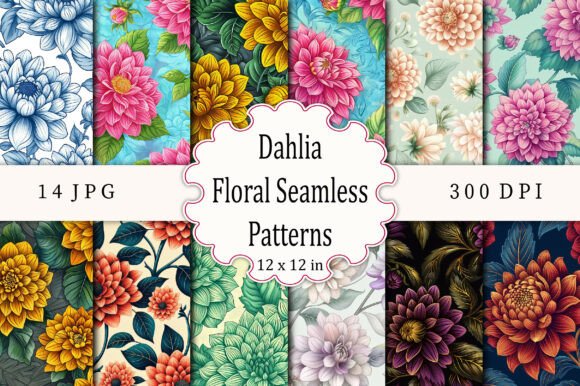
The package includes 14 unique JPG files, each capturing a distinct interpretation of the dahlia motif. This variety allows for flexibility in design systems where consistency is key but monotony must be avoided. Having multiple variations means you can mix and match patterns to create depth, or select a single dominant pattern for a cohesive look. The files are sized at 12×12 inches, a standard dimension in the scrapbooking, fabric printing, and web design industries. This size provides enough resolution for detailed viewing while remaining manageable for most software workflows.
Perhaps the most critical specification is the 300 DPI (dots per inch) resolution. In digital screens, 72 DPI is often sufficient, but for any physical production—such as business cards, brochures, fabric rolls, or ceramic tiles—300 DPI is the industry standard for sharpness. Without this resolution, patterns can appear pixelated or blurry when printed, undermining the professional quality of the end product. By providing high-resolution assets, this collection ensures that your designs remain clear and effective whether viewed on a mobile device or held in hand.
- Format: JPG files ensure broad compatibility with almost all design software, from Adobe Photoshop and Illustrator to Canva and Procreate.
- Dimensions: 12×12 inches offers a generous workspace for cropping, scaling, and layering without losing detail.
- Resolution: 300 DPI guarantees print-ready quality for tangible products.
- Variety: 14 unique designs provide ample choice for thematic consistency across different project phases.
Creative Applications Across Industries
The versatility of seamless patterns lies in their ability to adapt to various contexts. A dahlia pattern can evoke feelings ranging from rustic charm to modern sophistication, depending on how it is applied. Here are several practical ways creators and entrepreneurs can utilize these assets.
Branding and Packaging
For small business owners, particularly those in the wellness, beauty, or artisanal food sectors, packaging is a primary touchpoint for customer engagement. A subtle dahlia pattern on a soap box, tea wrapper, or cosmetic jar can communicate quality and attention to detail. Unlike busy, chaotic backgrounds, a well-executed seamless pattern adds texture without overwhelming the logo or product information. Designers can use the 14 variations to create a "family" of products, using one pattern for a summer line and another for a winter collection, maintaining brand recognition through consistent floral themes.
Fashion and Textile Design
Fabric printing relies heavily on seamless tiling. Whether designing for a fashion startup or creating custom home decor items like curtains and throw pillows, the 12×12 inch format is ideal for testing repeats. The dahlia’s natural symmetry works exceptionally well in textile layouts, allowing for both all-over prints and strategic placement. Hobbyists and freelancers can license these patterns for print-on-demand services, applying them to tote bags, scarves, or bedding. The high resolution ensures that the fine details of the petals translate accurately onto fabric substrates.
Digital Content and Web Design
Blogger and content creator audiences often seek visually appealing backdrops for their posts, presentations, or social media graphics. While vector patterns are common in web design, raster images like these JPGs offer rich color gradients and realistic textures that can add warmth to digital interfaces. Educators might use these patterns to create engaging worksheets or classroom decorations, bringing a sense of calm and order to learning environments. Marketers can incorporate the patterns into email newsletters or banner ads to break up text-heavy layouts and guide the user’s eye toward calls to action.
Strategic Implementation Tips
Having the assets is only half the equation; knowing how to use them effectively is what separates amateur designs from professional results. Here are some guidelines to keep your projects clear, organized, and audience-friendly.
Maintain Visual Hierarchy
One common mistake is letting the pattern dominate the message. When using Dahlia Floral Seamless Patterns, remember that the pattern should support the content, not compete with it. If you are designing a business card, place the contact information on a solid background or use a very light opacity version of the pattern. This ensures readability. Strong contrast between the text and the background is essential. Use dark fonts on light patterned areas or white text on darker sections of the dahlia design.
Color Palette Consistency
Patterns often come in specific colorways. To maintain a cohesive brand identity, limit your palette. If your brand colors are earth tones, select the patterns that feature greens, browns, and creams. Avoid mixing too many contrasting color schemes within the same project unless it is a deliberate stylistic choice. Consistency builds trust and recognition. You can adjust the hue or saturation of the JPG files in your editing software to better match your existing brand guidelines, ensuring that the floral elements feel native to your visual language.
Layering and Texture
To add depth, consider layering the seamless pattern over other elements. For instance, placing a semi-transparent solid color overlay on top of the dahlia pattern can mute the intensity of the flowers, making them suitable as a background for text. Alternatively, combining the pattern with typography can create a striking typographic poster. Experiment with blending modes in your design software to see how the pattern interacts with other layers. This technique can turn a simple floral image into a complex, textured backdrop that feels bespoke and original.
Why Choose Ready-Made Seamless Patterns?
In an era where speed and efficiency are paramount, creating seamless patterns from scratch can be time-consuming. It requires precise mathematical alignment to ensure the edges match perfectly. Using pre-made assets like the Dahlia Floral Seamless Patterns collection saves valuable time, allowing you to allocate more energy to conceptual development and client communication. It also reduces the risk of technical errors, such as visible seams or low-resolution artifacts, which can damage professional credibility.
Furthermore, these collections are curated by artists who understand aesthetics and balance. You gain access to professionally designed compositions that have already been tested for visual appeal. This is particularly beneficial for non-designers, such as entrepreneurs or educators, who may lack advanced graphic design skills but still want to produce high-quality materials. By leveraging these resources, you democratize access to professional-grade design elements.
Final Thoughts on Creative Integration
The dahlia is a flower of complexity and beauty, and its translation into seamless patterns offers a powerful tool for visual expression. Whether you are designing a luxury brand identity, printing custom textiles, or creating engaging digital content, these 14 high-resolution files provide a strong foundation for your creativity. The key to success lies in thoughtful application: respecting visual hierarchy, maintaining color consistency, and using the patterns to enhance rather than distract from your core message.
As you explore these designs, think about the story you want to tell. Does the pattern convey growth, resilience, or elegance? Align the emotional tone of the dahlia with your project goals. With the right approach, these floral assets can become integral components of your creative toolkit, helping you produce work that is not only beautiful but also strategically effective. Follow the source to discover more awesome artwork and continue expanding your design repertoire with high-quality, versatile resources.